


In-Wall Ceiling Fan Remote Control - AC Motor Fandeliers
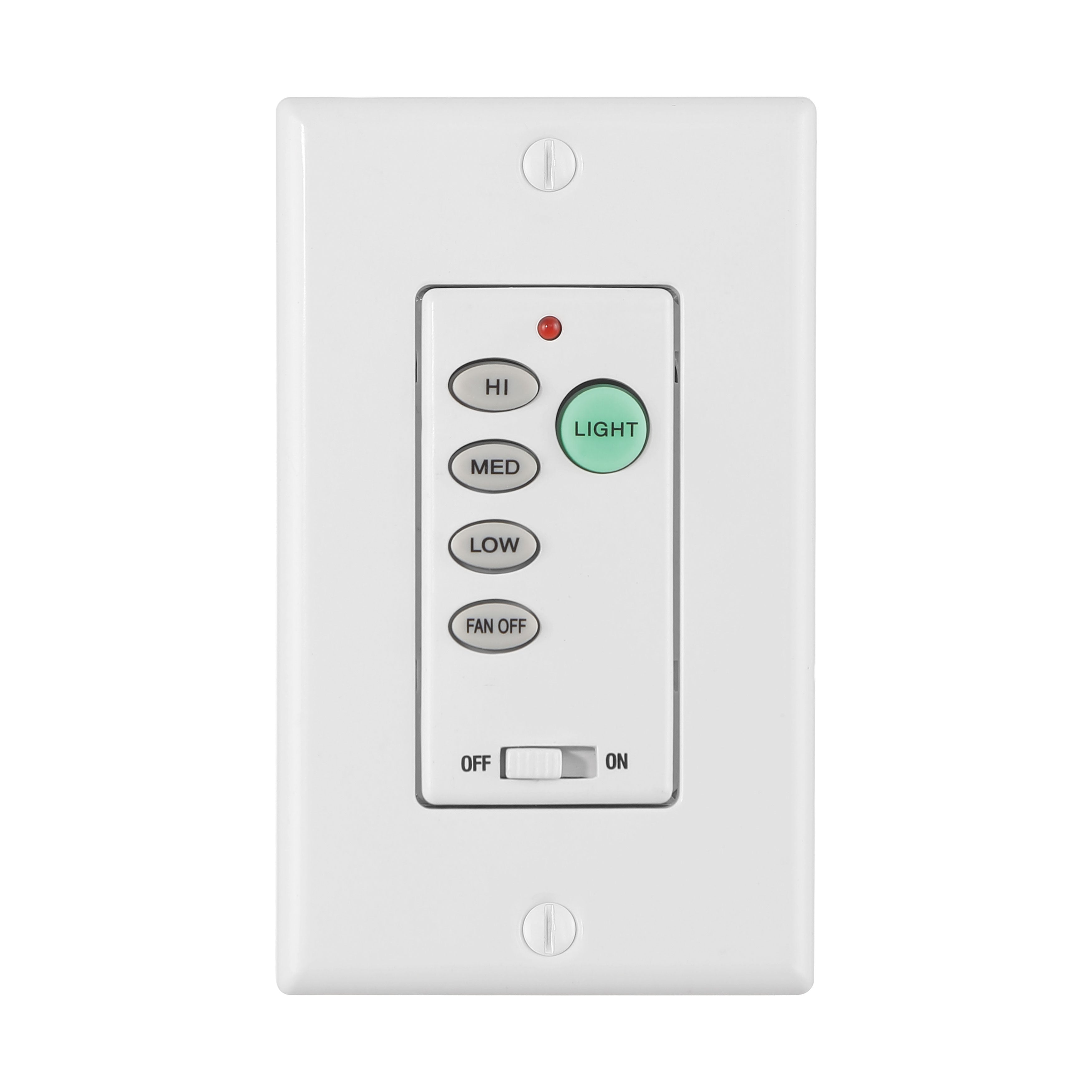
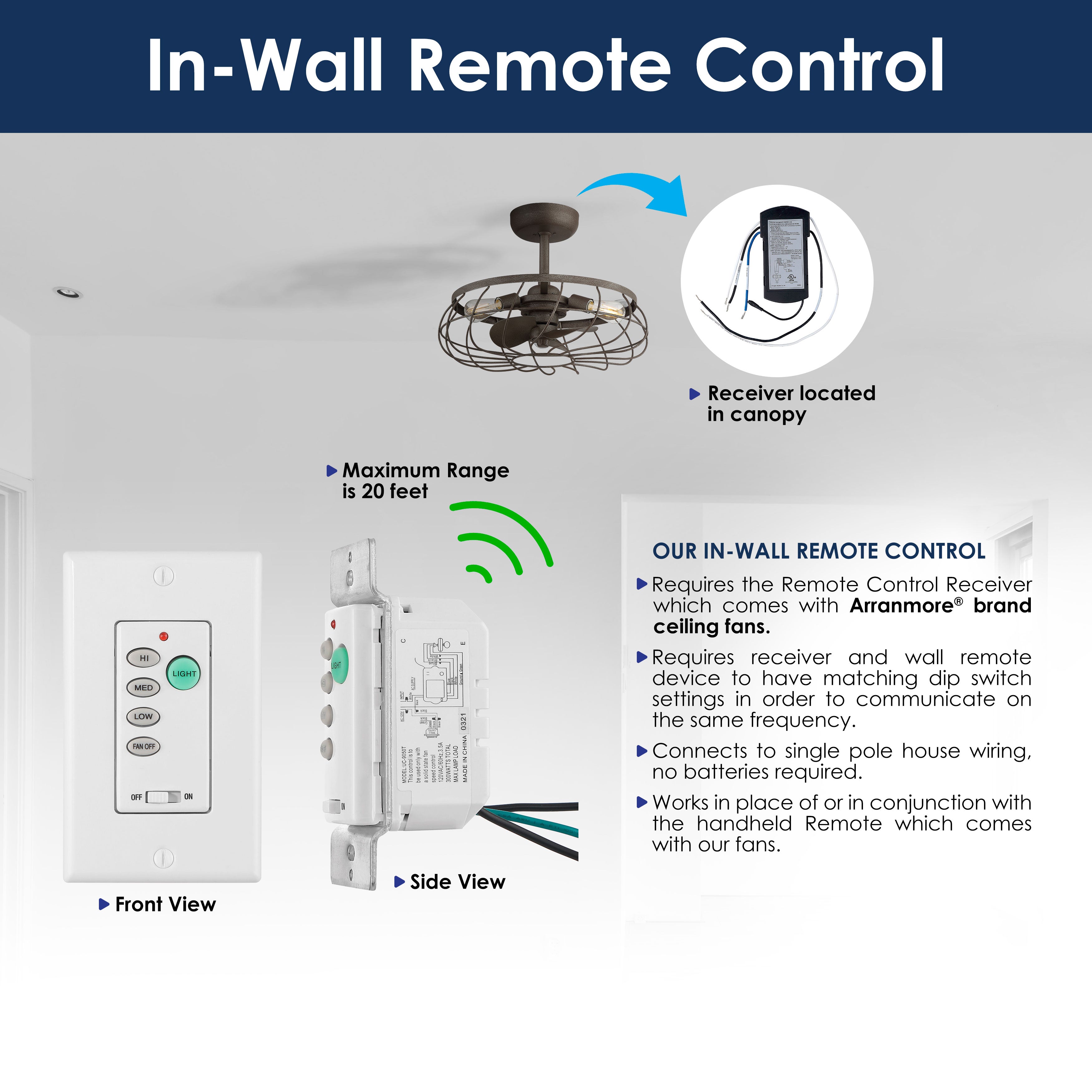
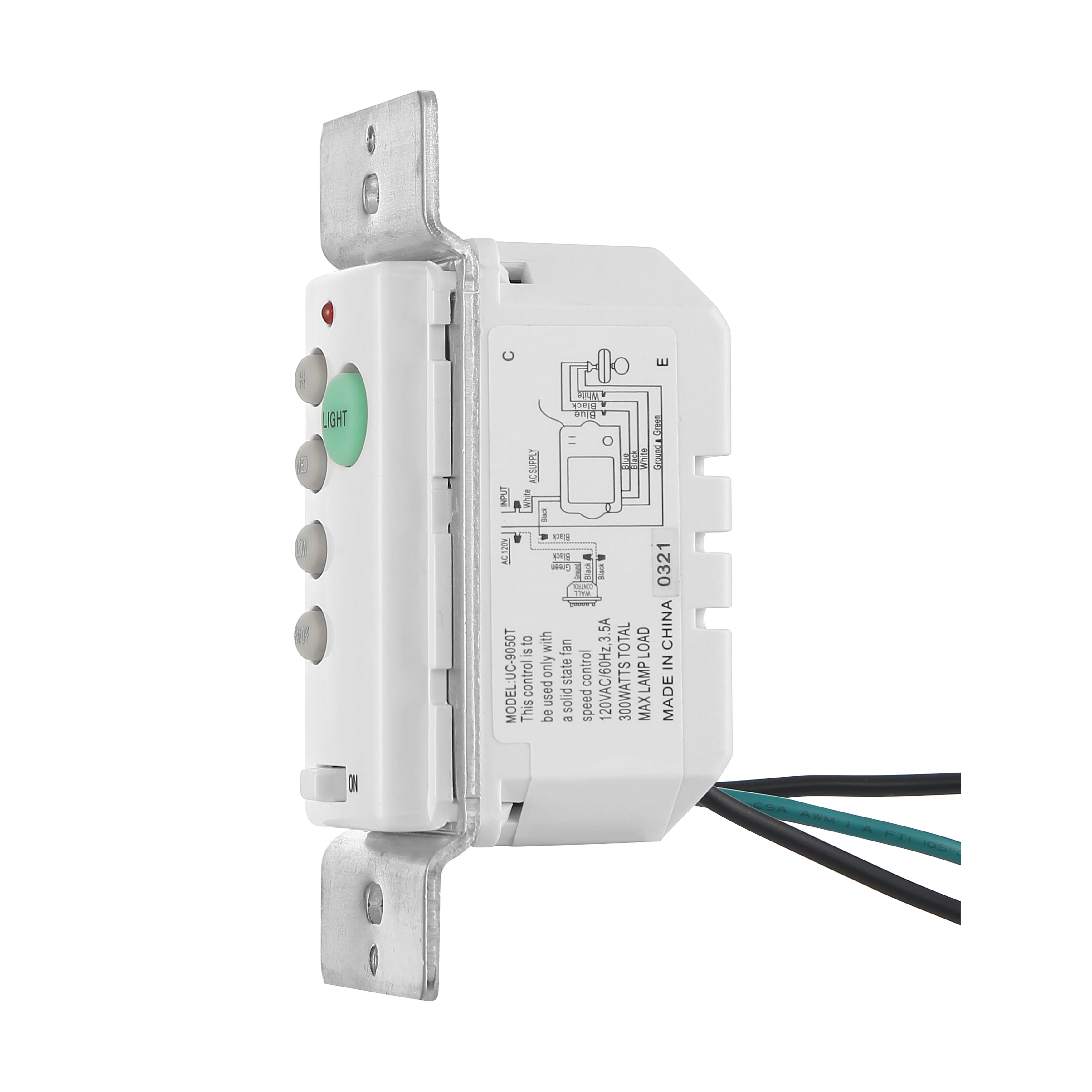
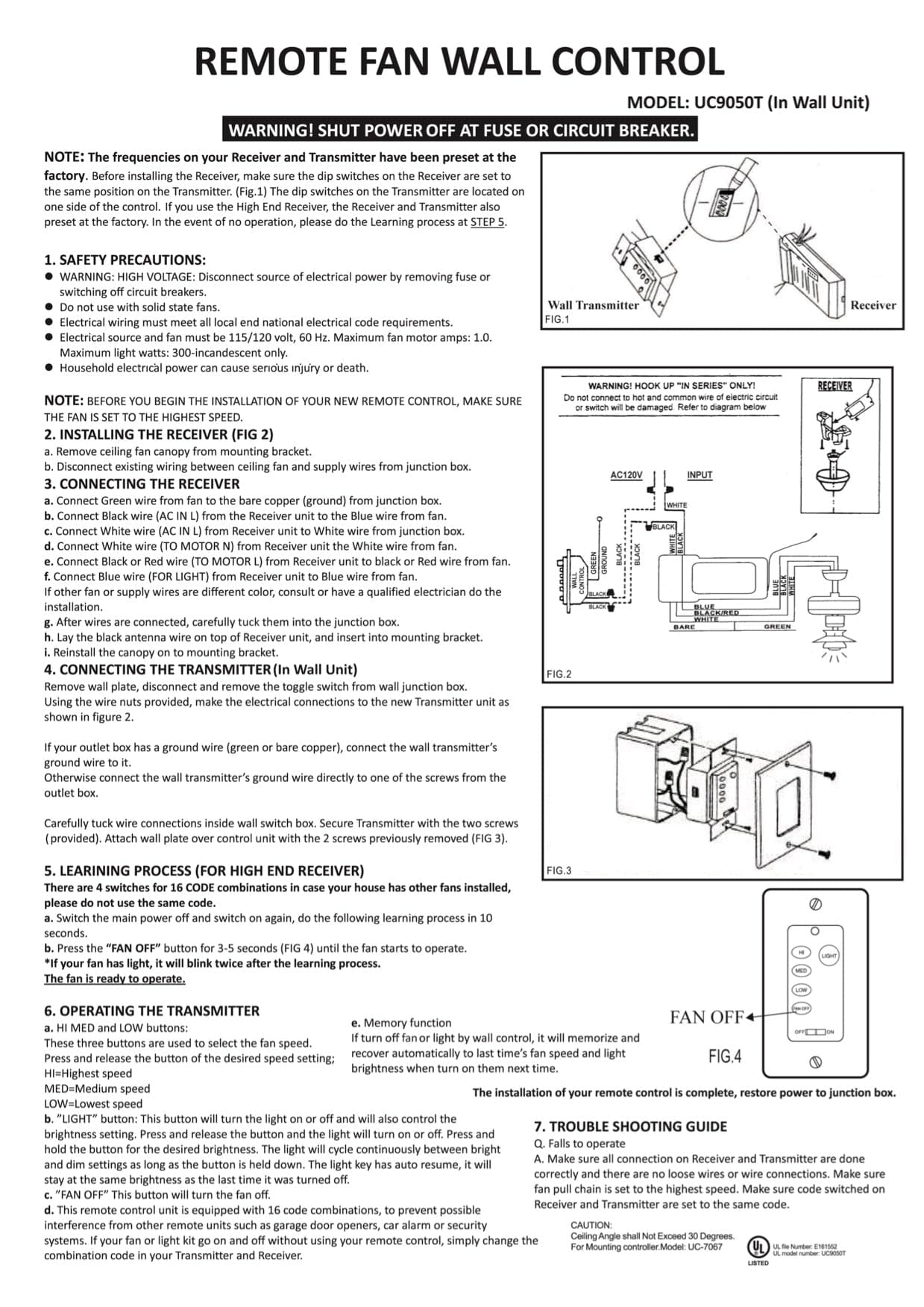
Mounts in to standard junction box. Connects to house power, hard-wired. Operates the fan and lights by communicating with the remote control receiver that comes with the fan.
Use in conjunction with the handheld remote control that comes with the fan, or by itself. Just set them to the same DIP switch settings.
Maximum range is 20 feet. Works best when controlling one fan with lights. If used to control more than one fan with lights, there may be synchronization differences in dimming levels. In which case the handheld remote can be used to make adjustments.
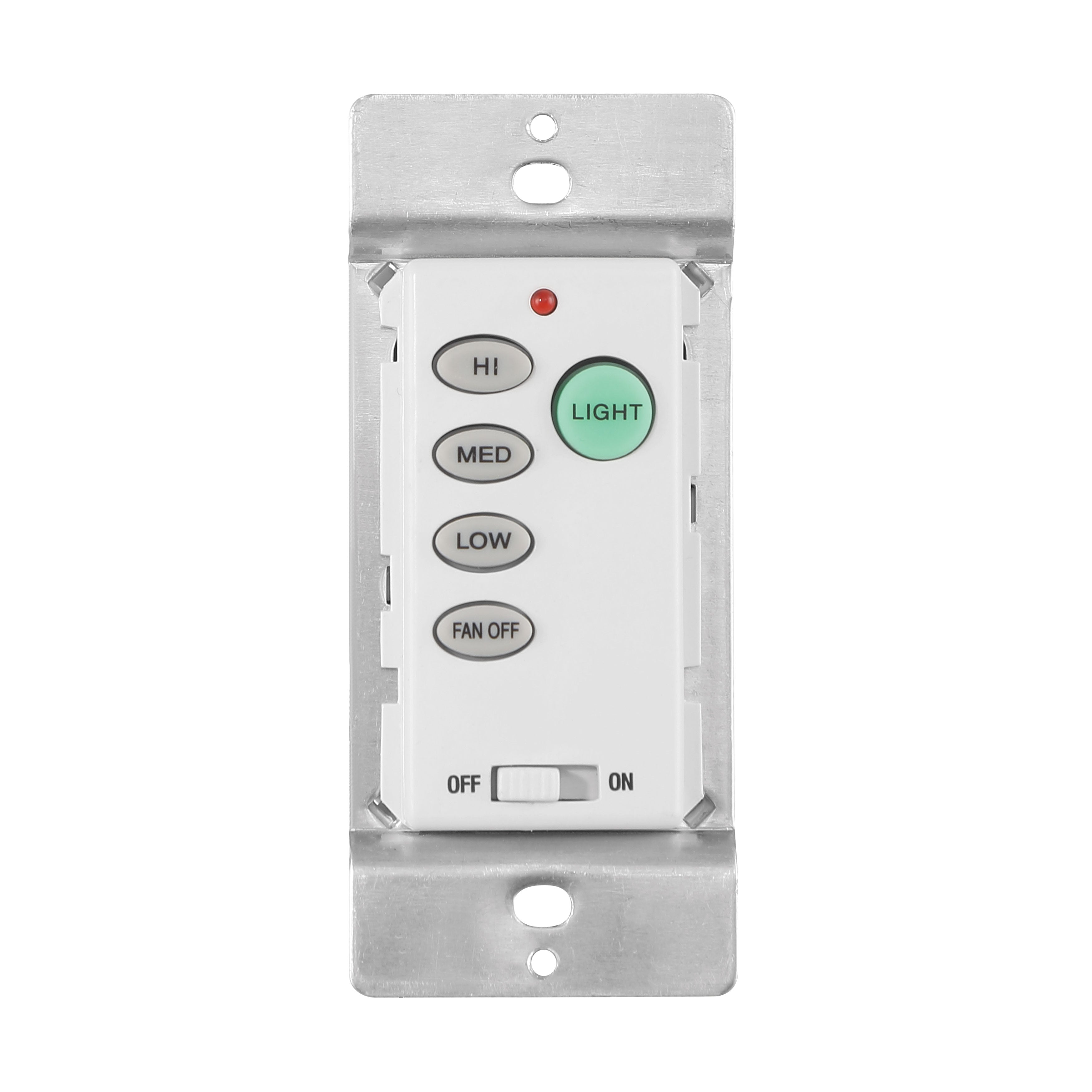
3 Fan speed settings, plus on/off switch.
Light Dimming Capability, just press and hold the green button and the lights will cycle through the dimming range.
Choose options
Need help?
Frequently Asked Questions
Order
A fandelier (fan + chandelier) combines the decorative look of a chandelier with the comfort and functionality of a ceiling fan. It’s a great choice when you want a statement-making fixture that delivers both style and air movement, often with an elevated, designer-forward appearance.
A ceiling fan is typically defined by a more classic or straightforward fan-forward look, designed to complement the room while focusing on comfort, airflow, and (in many cases) integrated lighting.
Choosing the right downrod length is essential because it determines how low your ceiling fan hangs, which affects air circulation, safety, and the overall look of the room. A downrod is the metal pipe that connects the fan motor to the mounting bracket and helps position the fan at the ideal height.
The goal is to keep fan blades about 7–9 feet above the floor—too high reduces airflow, and too low becomes a safety hazard. Downrods range from as short as 4 inches to over 70 inches, making them suitable for both standard and tall ceilings.
Yes—as long as the fan is rated for outdoor use. For covered porches, patios, and screened-in spaces, we recommend a damp-rated ceiling fan, which is designed to handle humidity, temperature changes, and moisture in the air. Indoor-only fans should stay indoors, and even outdoor-rated fans should be installed in a protected area (not directly exposed to rain, snow, or heavy weather) unless specifically listed for wet locations.

Free shipping on $99+
Fast, reliable delivery straight from our warehouse to your front door.